
Cerium Oxide vs. Other Polishing Agents: Why It’s the Preferred Choice
Cerium oxide is widely regarded as one of the best polishing agents in industries like optics, glass, and automotive. This blog explores why cerium oxide outperforms other polishing agents, looking at its unique properties, benefits, and the advantages it offers in various applications.
Polishing agents are essential in various industries for achieving high-quality, smooth, and glossy surfaces. Among the numerous polishing agents available, cerium oxide (CeO₂) stands out as the preferred choice, especially in fields such as optical lens manufacturing, glass polishing, and automotive surface finishing. But what makes cerium oxide superior to other polishing agents? Let’s dive into the properties and benefits that make cerium oxide the go-to material for precision polishing.
What Makes Cerium Oxide a Top Choice?
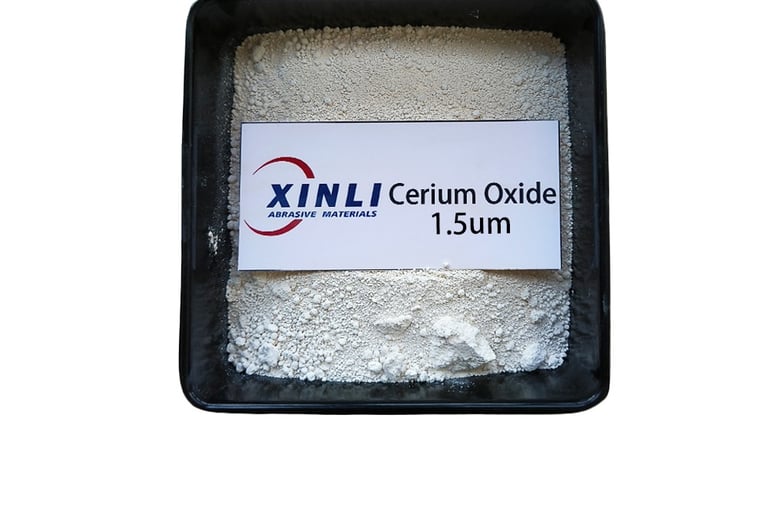
Cerium oxide is a rare-earth metal oxide with exceptional polishing capabilities, particularly for materials like glass and optical lenses. It’s known for its ability to produce high-quality finishes with minimal effort, making it highly effective in achieving the required surface smoothness.
Unlike traditional abrasive agents, cerium oxide has a unique combination of properties that makes it ideal for polishing delicate materials. Some of the reasons why cerium oxide is preferred over other agents are:
High Precision Polishing: Cerium oxide’s finely dispersed particles offer a high level of precision, making it the go-to polishing agent for delicate surfaces like optical glass, ceramic tiles, and jewelry.
Non-Damaging to Surfaces: Unlike some abrasive agents that can cause micro-scratches or damage the surface being polished, cerium oxide is soft enough to avoid such risks. It provides a smooth, scratch-free finish that is ideal for optical components and fine materials.
Excellent Efficiency: Cerium oxide can effectively polish a variety of materials, including glass, ceramics, and metals, while offering faster results compared to other abrasives. Its efficiency reduces the need for multiple polishing steps, which saves both time and cost.
Cerium Oxide vs. Traditional Abrasive Agents
Let’s compare cerium oxide with some other commonly used polishing agents:
1. Alumina (Aluminum Oxide)
Alumina is one of the most widely used abrasive agents, particularly in industrial applications. While it is effective for polishing harder materials, such as metals and ceramics, cerium oxide outperforms alumina when it comes to polishing glass and optical materials. Here’s why:
Surface Quality: Cerium oxide provides a much smoother, clearer finish compared to alumina, especially on glass and optical lenses, which require high precision.
Application: Alumina is more abrasive and can damage softer surfaces, whereas cerium oxide is much gentler, making it ideal for polishing delicate and high-precision materials.
2. Diamond Powder
Diamond powder is often regarded as one of the hardest abrasives available, and it’s excellent for grinding extremely hard materials. However, it has its drawbacks:
Cost: Diamond powder is expensive compared to cerium oxide, making it less cost-effective for applications where cerium oxide would suffice.
Surface Damage: Due to its extreme hardness, diamond powder can cause micro-cracking or surface damage, particularly on softer materials like glass or ceramics. Cerium oxide, on the other hand, is much gentler and minimizes the risk of such damage.
3. Silicon Carbide (SiC)
Silicon carbide is another abrasive agent commonly used in polishing. However, unlike cerium oxide, silicon carbide is much coarser and can leave scratches or marks on the material being polished. Here’s how cerium oxide excels:
Finish Quality: Cerium oxide achieves a finer and more reflective finish, making it the preferred choice for polishing optical lenses, glass, and other high-precision materials.
Gentle Polishing: While silicon carbide is useful for initial grinding or rough polishing, cerium oxide is better suited for the final, fine-polishing stages that require a smooth, high-quality finish.
The Advantages of Using Cerium Oxide
Given its unique properties, cerium oxide offers several advantages over other polishing agents, especially for industries requiring high precision and surface quality:
High Precision: Cerium oxide allows for a level of detail and precision that is unmatched by other polishing agents. This makes it ideal for use in optical and glass industries, where surface clarity is crucial.
Eco-Friendly: As a rare-earth element, cerium oxide is more environmentally friendly compared to synthetic abrasives. With better recycling opportunities and a lower environmental footprint, it’s becoming the preferred choice for sustainable polishing.
Versatility: Cerium oxide is highly versatile, working well on a wide range of materials, including glass, ceramics, and metals. This versatility makes it a go-to solution for a variety of polishing applications across different industries.
Cost-Effectiveness: While cerium oxide is more expensive than some abrasives, its efficiency in polishing materials quickly and with fewer steps makes it cost-effective in the long run.
Consistency: Cerium oxide produces consistent results, ensuring a uniform surface finish across large batches. This reliability is essential for industries that require high precision and uniformity, such as the optical and automotive sectors.
Conclusion
While there are numerous polishing agents available in the market, cerium oxide continues to be the preferred choice for precision polishing due to its unique ability to produce flawless, smooth finishes without damaging the material. Its efficiency, gentleness, and versatility make it an invaluable tool in industries like glass manufacturing, optics, and automotive. Compared to other abrasive agents like alumina, diamond powder, and silicon carbide, cerium oxide offers superior results, especially when polishing delicate surfaces.
For industries that require top-tier surface quality and minimal risk of damage, cerium oxide remains the gold standard in polishing materials.

Get in touch
Contact us to learn more about cerium oxide and its wide applications. Our team is ready to answer your questions and provide tailored solutions for your needs.