
The Role of Cerium Oxide in Precision Glass Polishing
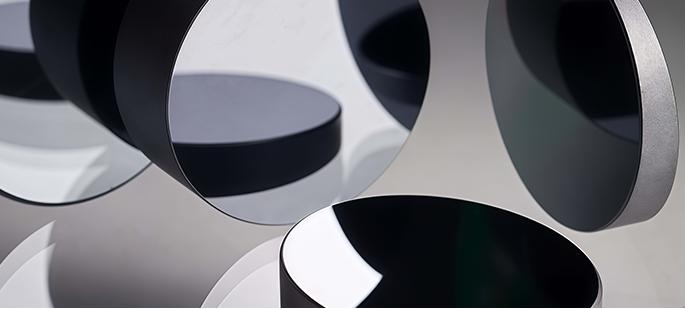
Cerium oxide is widely used in precision glass polishing due to its excellent chemical-mechanical properties. It reacts gently with glass surfaces, achieving a high level of smoothness and clarity, making it ideal for optical lenses, screens, and mirrors.
Introduction
Cerium oxide (CeO₂), also known as ceria, is a rare earth oxide that plays a crucial role in precision glass and optical polishing. From camera lenses and smartphone displays to telescope mirrors and photomask substrates, cerium oxide ensures unparalleled clarity, low surface roughness, and minimal micro-defects. What makes this material truly unique is its dual action—combining mechanical abrasion with mild chemical reactivity to produce ultra-smooth surfaces that conventional abrasives cannot achieve.
Chemical-Mechanical Synergy
Unlike purely mechanical abrasives such as aluminum oxide or silicon carbide, cerium oxide operates through a chemical-mechanical polishing (CMP) mechanism. During polishing, CeO₂ interacts with SiO₂ on the glass surface, forming temporary Ce–O–Si bonds. This soft intermediate layer can be easily removed by friction, continuously renewing the surface and achieving atomic-level smoothness. The typical material removal rate (MRR) for optical glass using CeO₂ slurry is 200–400 nm/min, depending on slurry concentration and applied pressure.
Particle Size and Purity Control
In high-end applications, particle size distribution is critical. Most cerium oxide polishing powders are classified into 0.5–3 μm categories, with D50 values tightly controlled for consistent removal performance. High-purity grades (≥99.9%) minimize the risk of metallic contamination, preventing unwanted color tinting or surface haze. For optical polishing, Fe₂O₃ content is typically kept below 0.01%.
Industrial Applications
Optical Lenses: CeO₂ enables sub-nanometer surface roughness (Ra < 1 nm) for lenses used in microscopes, cameras, and LiDAR systems.
Display Glass: Smartphone and tablet manufacturers rely on cerium-based slurries for uniform, scratch-free surfaces.
Mirror Substrates: Telescope and laser mirrors demand atomic-level smoothness to ensure light reflection precision—achievable only with cerium oxide.
Economic and Process Considerations
Although cerium oxide is more expensive than alumina, its higher efficiency and longer slurry life reduce overall processing costs. Regeneration systems can recover up to 70% of used ceria slurry through sedimentation and filtration. Furthermore, its moderate pH (6–7) and non-toxic nature simplify wastewater treatment.
Future Outlook
As precision optics continue to evolve toward nanoscale tolerances, cerium oxide remains irreplaceable. Research is moving toward surface-modified ceria particles that provide faster removal rates and improved selectivity. Hybrid formulations combining CeO₂ with rare earth fluorides are also emerging, further optimizing performance for high-end optical glass.

Get in touch
Contact us to learn more about cerium oxide and its wide applications. Our team is ready to answer your questions and provide tailored solutions for your needs.